When we think about anxiety, we usually picture racing thoughts, excessive worry, or a feeling of impending doom. However, anxiety is not just a mental or emotional experience; it is a full-body response.
Often, people visit doctors for unexplained aches, pains, or stomach issues, only to be told that “everything looks fine.” The reality is that the physical symptoms of anxiety can be just as intense and debilitating as the mental ones. Recognizing these bodily signals is the first crucial step toward finding genuine relief and healing.
If you have been feeling physically off lately, here are five common physical symptoms of anxiety that you might be ignoring.
The Mind-Body Connection: How Anxiety Manifests Physically
When your brain perceives a threat—even if that threat is an upcoming deadline or social stress—it triggers your body’s “fight or flight” response. Your nervous system floods your bloodstream with adrenaline and cortisol. While this is helpful if you need to run from physical danger, staying in this state of high alert day after day takes a massive toll on your body.
Here is how that chronic stress typically shows up physically.
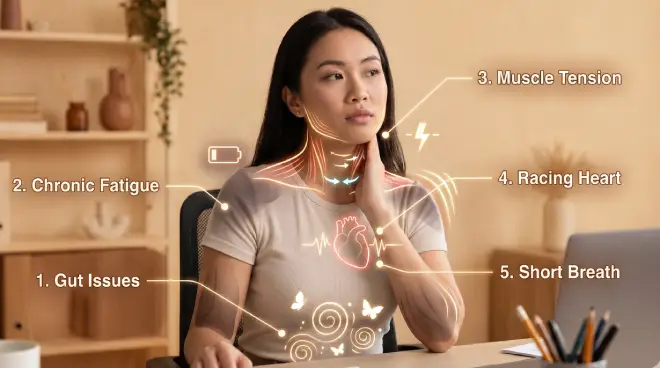
1. Unexplained Stomach Issues and Digestive Trouble
Your gut and your brain are deeply connected, communicating constantly through the vagus nerve. If you are experiencing high anxiety, your body diverts blood flow away from your digestive system to your muscles.
This disruption can cause a variety of gastrointestinal issues, including:
- Nausea or a “butterflies in the stomach” sensation.
- Frequent indigestion, bloating, or gas.
- Changes in appetite.
- Irritable Bowel Syndrome (IBS) flare-ups.
If you find yourself dealing with frequent stomach upset without a clear dietary cause, anxiety might be the root of the problem.
2. Chronic Fatigue and Sleep Disturbances
It takes an enormous amount of physical energy to keep your body in a constant state of high alert. Even if you haven’t been physically active, carrying the weight of anxiety can leave you feeling completely drained.
Furthermore, anxiety often disrupts sleep architectures. You might experience:
- Difficulty falling asleep because your mind won’t shut off.
- Waking up frequently during the night.
- Waking up feeling unrefreshed, no matter how many hours you stayed in bed.
3. Muscle Tension, Aches, and Jaw Clenching
When your brain signals danger, your muscles instinctively contract to prepare for action. Over time, this chronic muscle tension becomes your body’s default state.
Common signs of anxiety-induced tension include:
- Persistent neck and shoulder pain.
- Frequent tension headaches.
- Clenching your jaw or grinding your teeth, especially while you sleep (bruxism).
Many people don’t realize they are holding their shoulders up near their ears until they consciously try to take a deep breath and drop them.
4. Racing Heart or Palpitations Out of Nowhere
A sudden, pounding heartbeat can be incredibly frightening and is one of the most alarming physical symptoms of anxiety. You might feel like your heart is fluttering, skipping a beat, or beating too hard against your chest.
This happens because adrenaline is signaling your heart to pump more oxygen to your muscles. While it can mimic the feeling of a heart issue (and it is always wise to get heart symptoms checked by a physician), palpitations are a hallmark symptom of panic and high anxiety.
5. Shortness of Breath or Feeling “Air Hunger”
Have you ever felt like you just can’t get a satisfying, deep breath? This sensation, often called “air hunger,” is a common anxiety symptom.
Anxiety causes your breathing to become rapid and shallow (chest breathing rather than belly breathing). This hyperventilation throws off the balance of oxygen and carbon dioxide in your blood, which ironically makes you feel like you aren’t getting enough air. It can also lead to lightheadedness or dizziness.
When to Seek Professional Help
If you recognize several of these physical symptoms of anxiety in your daily life, it is important to know that you are not alone, and it is not “all in your head.” Your body is simply reacting to sustained stress.
Ignoring these symptoms won’t make them disappear. In fact, prolonged anxiety can lead to more severe health complications down the road.
Finding Support in South Kolkata
Acknowledging the connection between your physical discomfort and your mental health is a powerful realization. Healing begins when you address the root cause rather than just managing the physical discomfort.
At Healing Minds CCE, we specialize in helping individuals untangle the complex web of anxiety. Through evidence-based approaches like Cognitive Behavioural Therapy (CBT), we can help you understand your triggers, calm your nervous system, and regain control of both your mind and your body.
- Explore our Counselling and Psychotherapy Services to see how we can help you find relief.
- Ready to take the first step? Contact us today to schedule an appointment.
- You can also visit our clinic in Baishnabghata Byelane, Kolkata for an in-person consultation in a safe, welcoming environment.