
When experiencing chronic anxiety, the mind often feels like it is running on a loop of worst-case scenarios. Whether it is a sudden spike in panic before a presentation or a lingering sense of dread about the future, anxiety frequently tricks the brain into perceiving threats where none exist.
Many people believe that therapy simply involves venting about these fears. While a supportive environment is crucial, effective clinical intervention requires active, structured rewiring of your thought processes. This is the foundation of Cognitive Behavioral Therapy (CBT).
If you have been researching effective treatments and are considering CBT for anxiety, it is essential to understand the clinical mechanics of how this evidence-based modality actively restructures your brain’s response to stress.
The Core Philosophy: The Cognitive Triangle
The foundational premise of CBT is that our thoughts, feelings, and behaviors are fundamentally interconnected.
When you experience an event, it is not the event itself that causes anxiety, but rather your interpretation of that event. If your automatic interpretation is negative or catastrophic, it triggers emotional distress and physical symptoms (like a racing heart), which then leads to avoidance behaviors.
CBT intervenes directly at the level of interpretation. By identifying and altering maladaptive thoughts, we can systematically change how you feel and how you react.
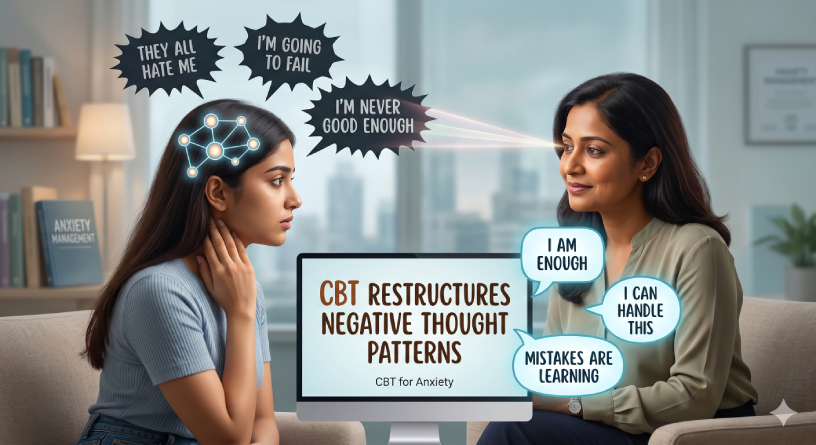
Identifying “Cognitive Distortions”
In the clinical consulting room, the first step in CBT is teaching clients to recognize “cognitive distortions”—irrational, inflated thought patterns that fuel anxiety. Common distortions include:
- Catastrophizing: Assuming the absolute worst outcome will happen (e.g., “If I fail this exam, my entire life is ruined”).
- Mind-Reading: Believing you know exactly what others are thinking (e.g., “My boss didn’t say good morning, she must be planning to fire me”).
- All-or-Nothing Thinking: Viewing situations in absolute black-and-white categories, with no room for nuance or a middle ground.
How CBT for Anxiety Actually Works in Practice
CBT is a highly structured, time-limited, and goal-oriented therapy. It is not about simply “thinking positive.” It is about thinking accurately. Here is how a licensed clinical psychologist guides you through the process:
1. Cognitive Restructuring
Once a cognitive distortion is identified, your therapist will help you put that thought “on trial.” You will learn to examine the evidence for and against your anxious thought. Through guided discovery, you replace the distorted thought with a balanced, realistic alternative. Over time, this conscious restructuring creates new, healthier neural pathways.
2. Behavioral Experiments
Anxiety often demands avoidance. If social situations cause panic, you stop going out. While avoidance brings temporary relief, it clinically reinforces the anxiety long-term. CBT utilizes behavioral experiments to test the validity of your fears in the real world. By gradually facing feared situations without avoiding them, your nervous system learns that the perceived threat is not actually dangerous.
3. Somatic Regulation
Because anxiety triggers a physical fight-or-flight response, CBT often integrates physiological regulation techniques. You will learn specific breathing and grounding exercises designed to lower cortisol levels and disengage the hyperactive sympathetic nervous system.
Is CBT the Right Approach for You?
CBT is considered the gold standard treatment for a variety of anxiety disorders, including Generalized Anxiety Disorder (GAD), Social Anxiety, Panic Disorder, and specific phobias. It is highly effective for individuals who want a practical, proactive approach to their mental health and are willing to practice new skills between sessions.
Begin Your Healing Journey in South Kolkata
You do not have to live at the mercy of intrusive, anxious thoughts. With the right clinical tools, you can actively rewire your brain and reclaim your peace of mind.
To learn more about our specific approach to treating anxiety and other emotional distress, explore our Evidence-Based Psychotherapy Services.
If you are ready to break the cycle of anxiety and take back control of your thought patterns, book a consultation session with our clinical team today.
Author Bio:Reviewed and approved by the Clinical Psychology Team at Healing Minds: Centre for Counselling and Education (C.C.E.). Our licensed practitioners specialize in Cognitive Behavioral Therapy (CBT), adult psychotherapy, and evidence-based clinical interventions in West Bengal. View our practitioners’ clinical credentials here.